The problem, stated properly
At that scale the bottleneck isn't the database. It's that a worried person and the person looking for them are standing three hundred metres apart with no shared channel, and the only infrastructure between them is a steward with a phone and patchy signal.
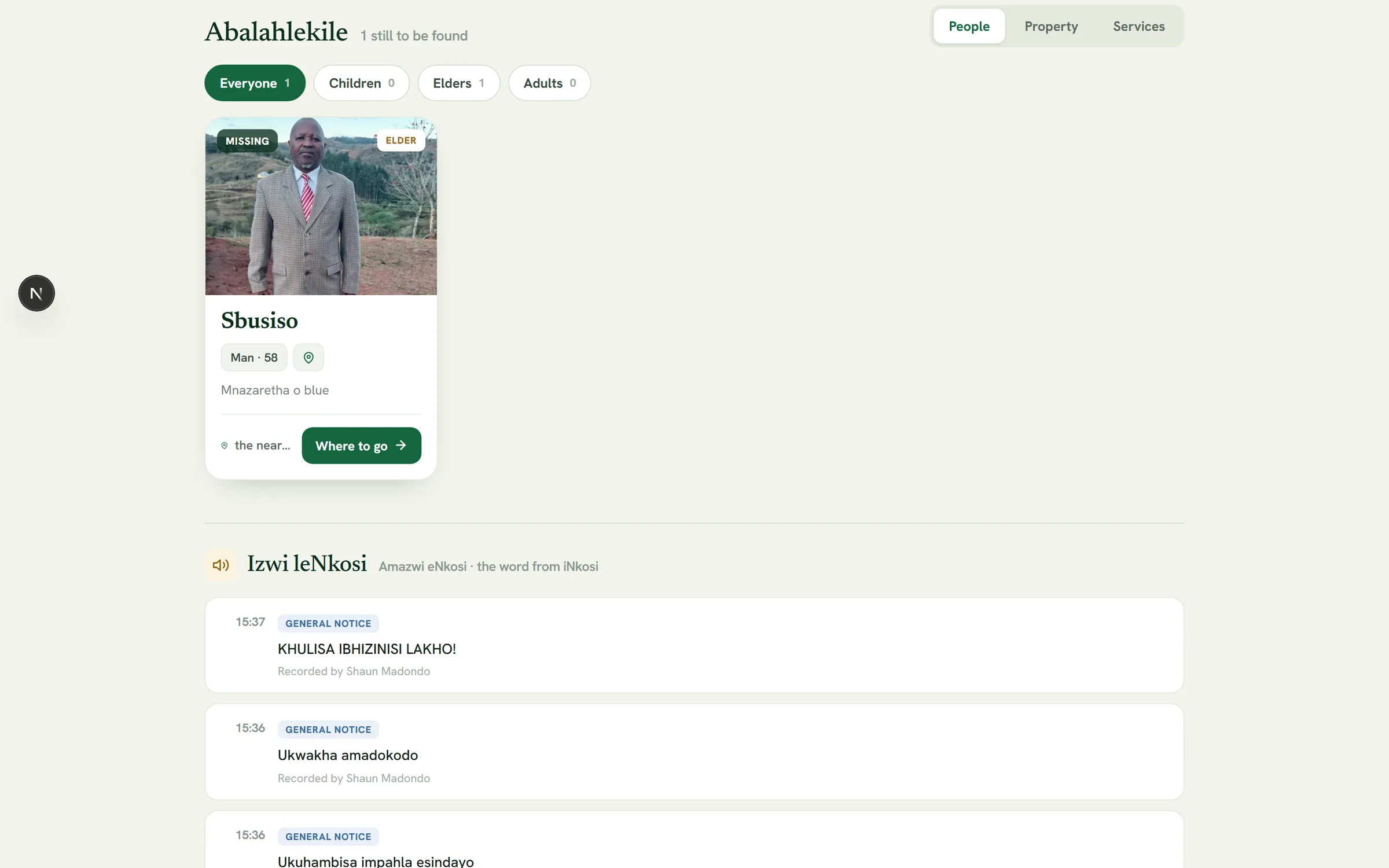
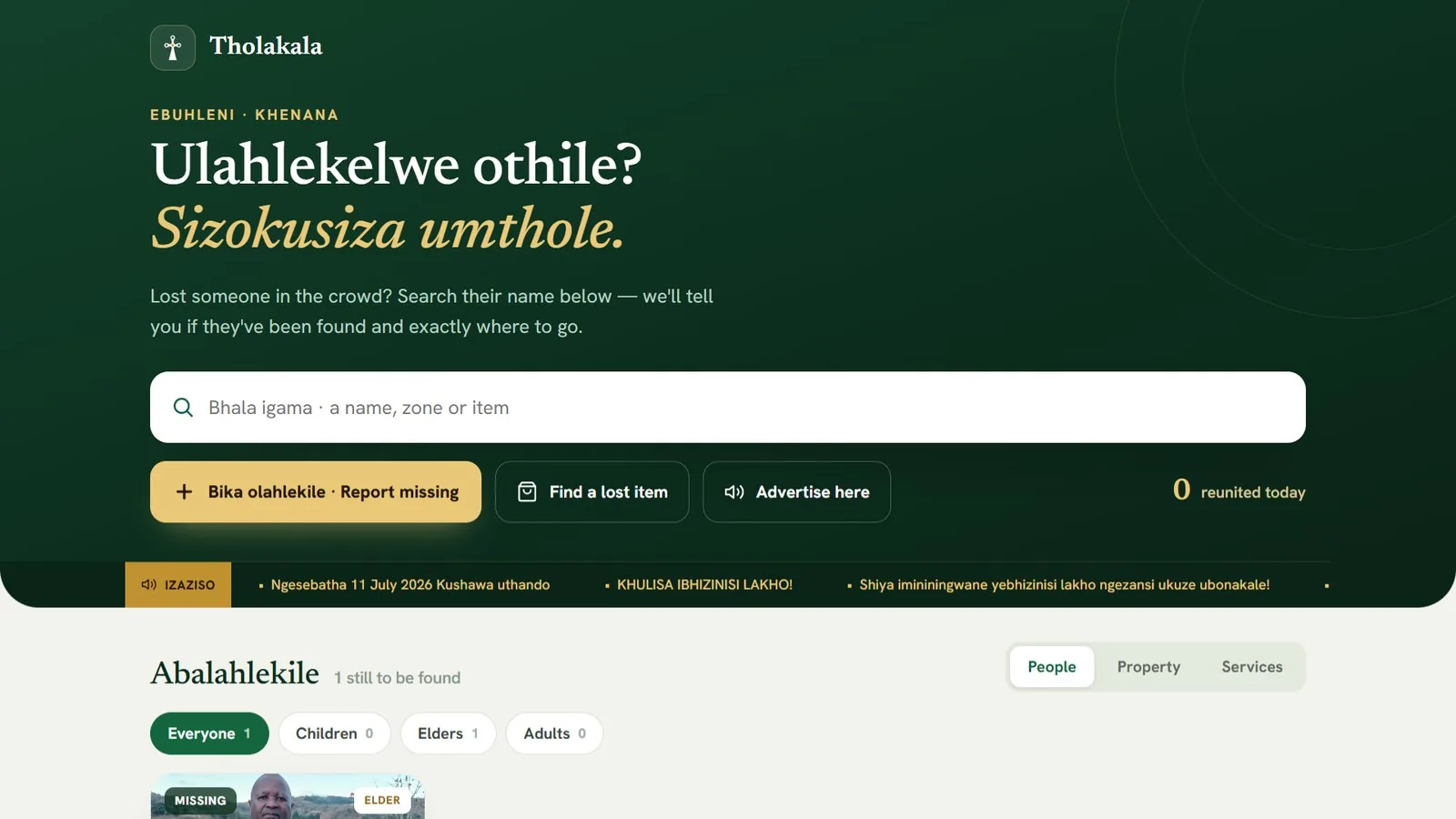
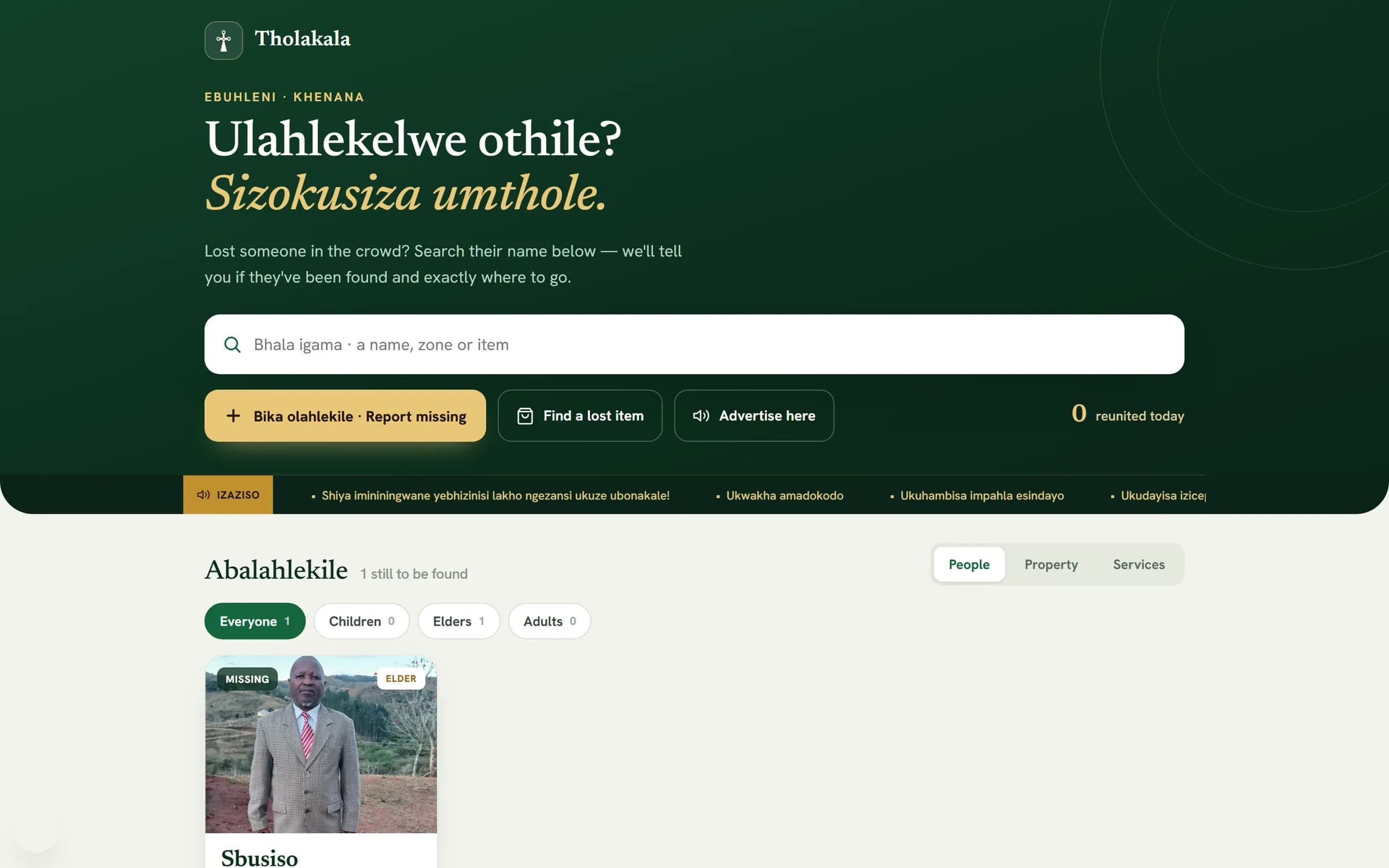
So the design starts from the steward, not the app. A steward console used standing up at physical Help Points, offline-tolerant because signal at the site is not reliable; a Flutter field app for stewards moving around the grounds; and a public page where anyone can browse open cases and submit a report without an account.
The rule that shaped it
Found adults and found children are handled differently, always.
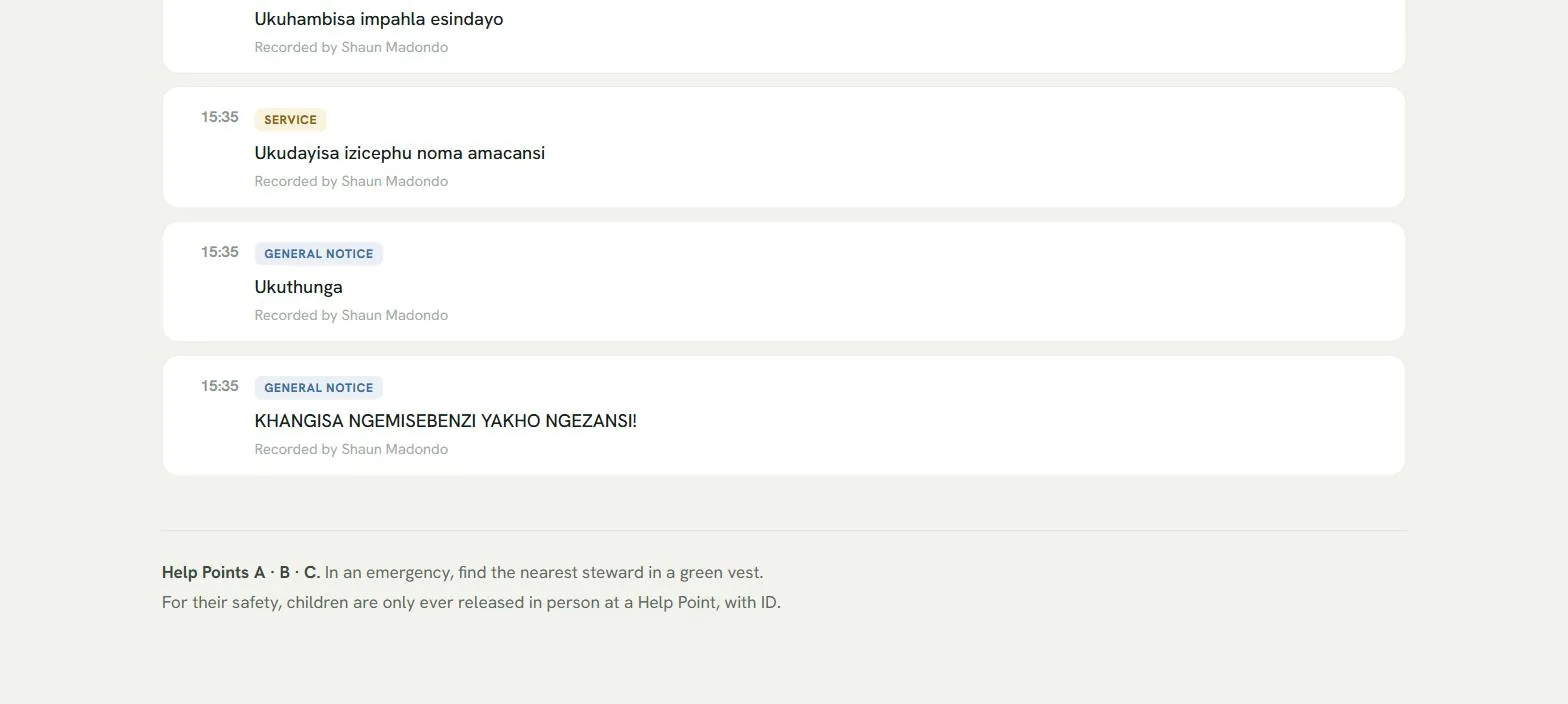
A capable adult who has been found can have a finder's contact number published. A child never can. A found child goes to a Help Point and the handover is done in person by a steward, who verifies the collecting adult and records it. The handover screen exists because that step has to be deliberate, logged, and impossible to skip by accident.