Systems / Platforms
Platforms and social products
Multi-user products where the thing being modelled is people and how they connect.
A platform is a product whose value comes from the people on it, so the hard part is never the feature list. It is consent, trust, the rules that protect the vulnerable user, and what happens at the edges. We design those rules first and the screens around them.
The work that proves it
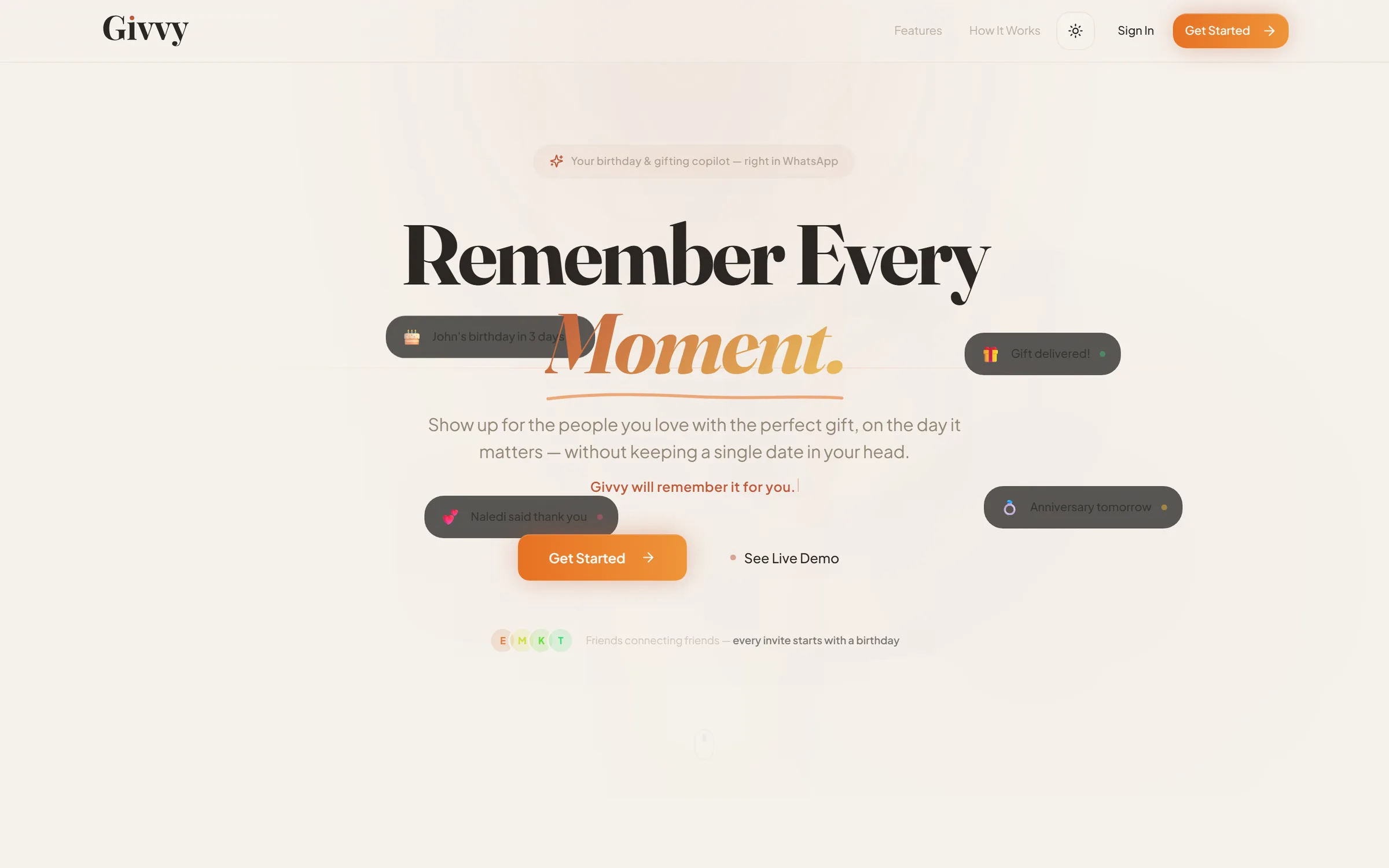
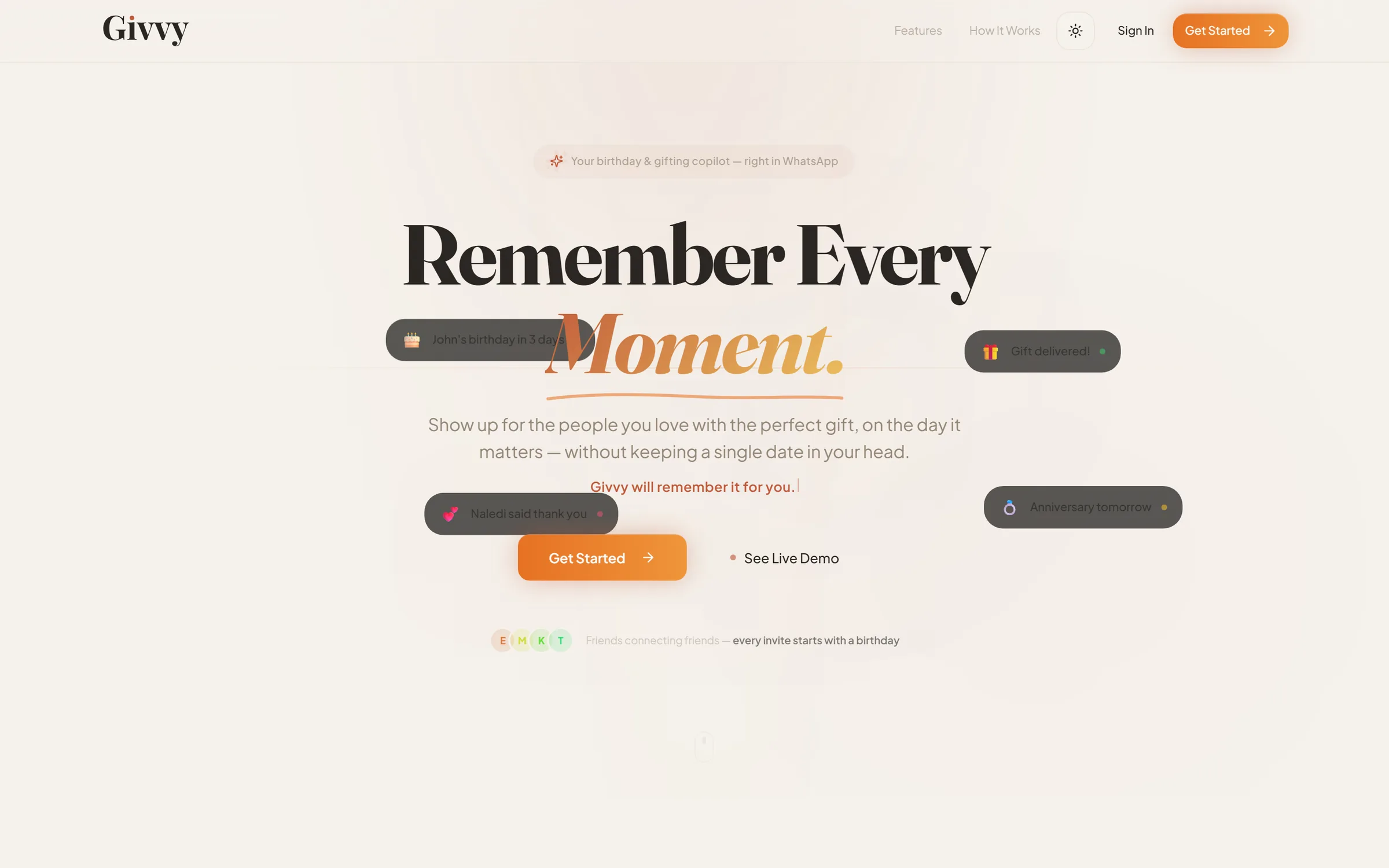
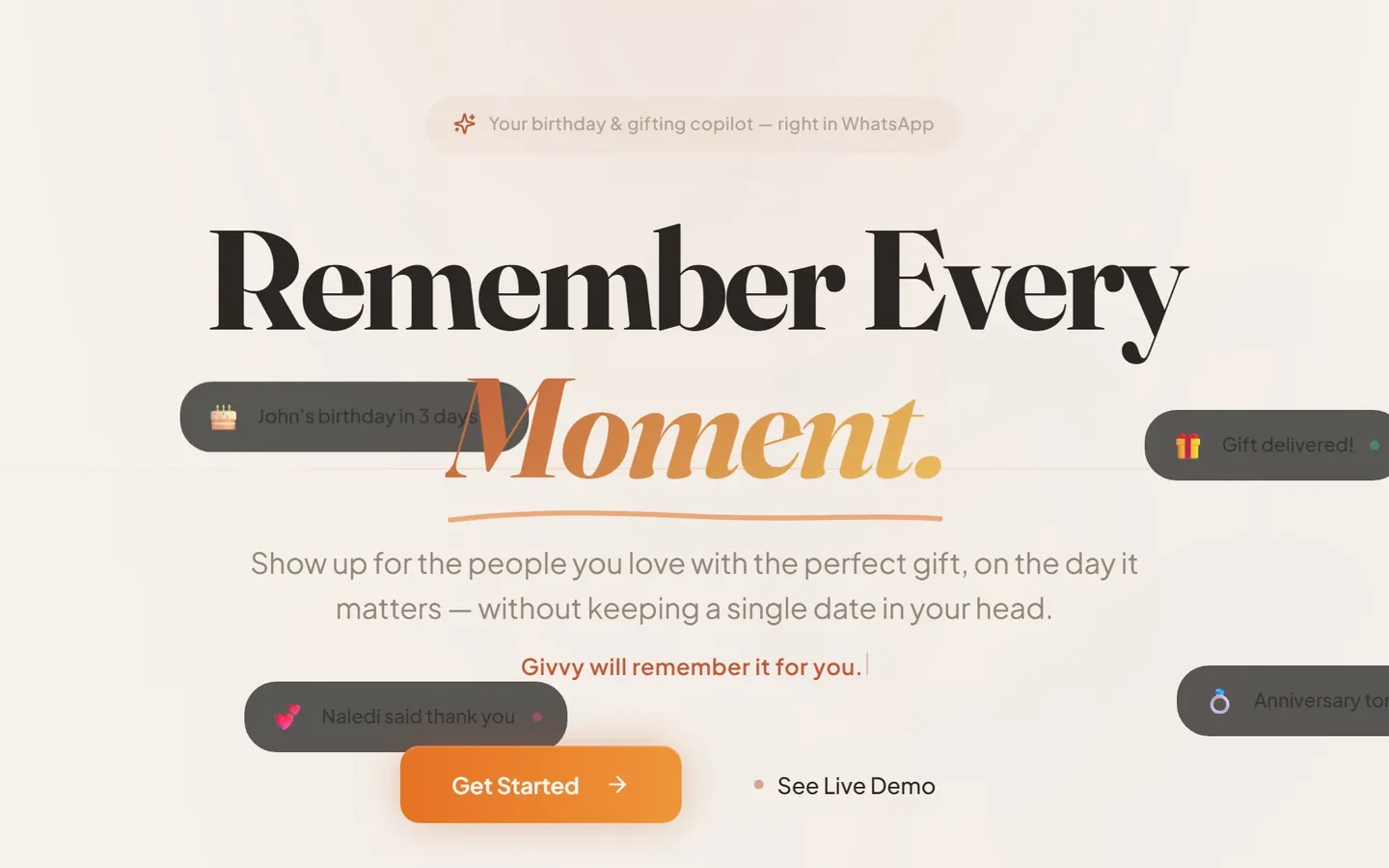 BeGivvy2024–26
WhatsApp-native birthday reminders and gifting, built as a social graph rather than a calendar with notifications bolted on.
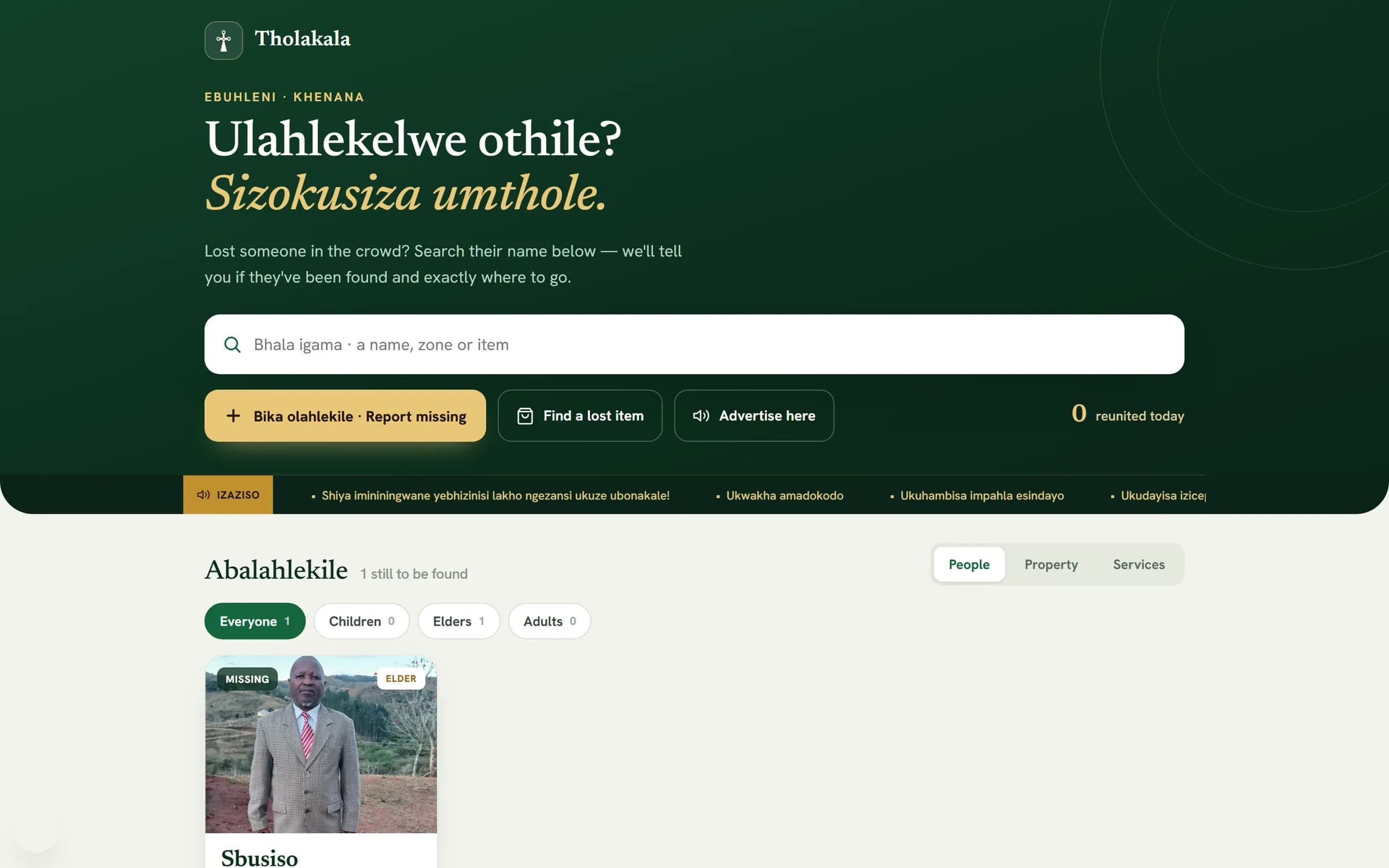
 Tholakala2026
A missing-persons and lost-property platform for gatherings of tens of thousands, built for the annual pilgrimage at Ebuhleni.
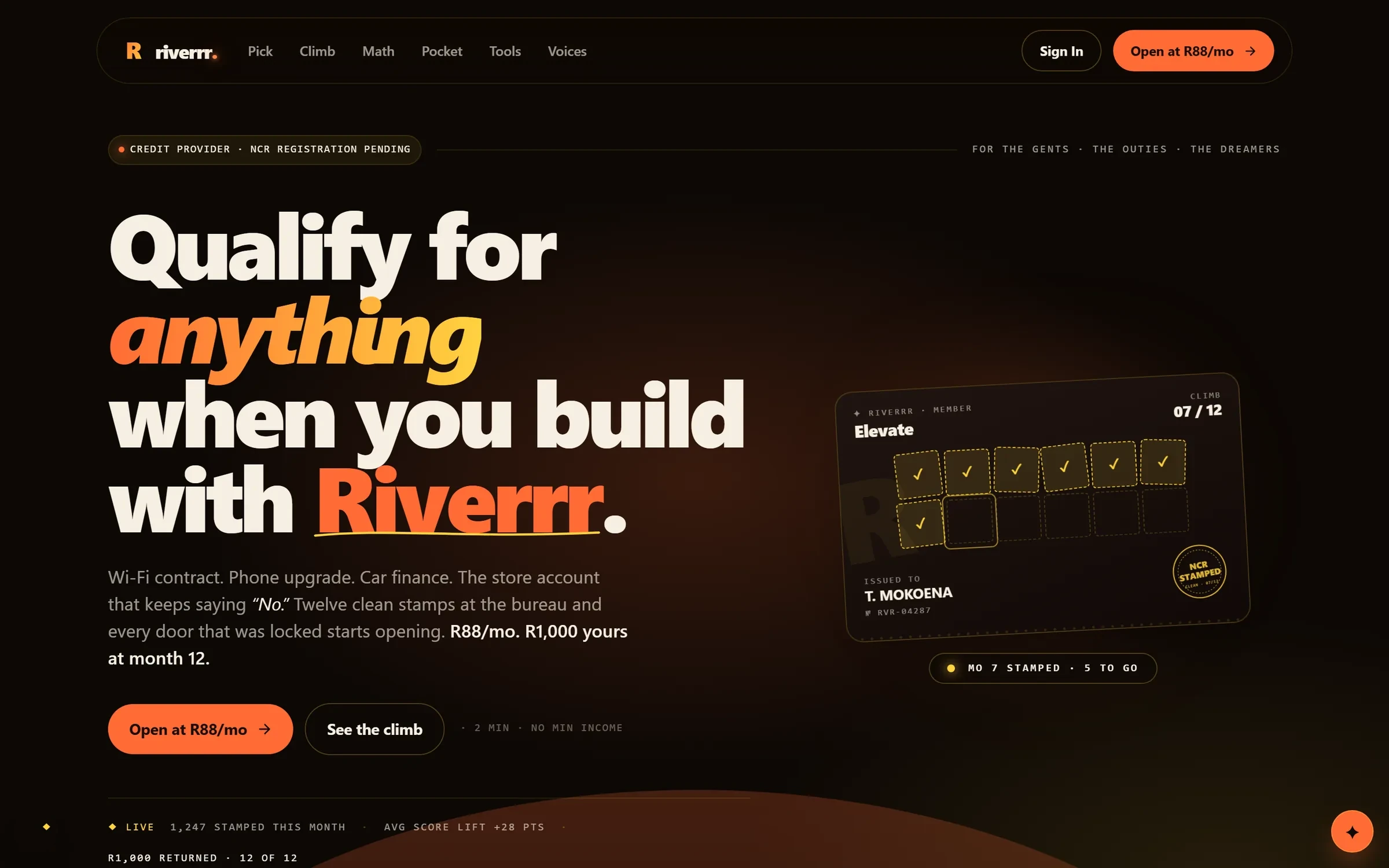
 Riverrr2025
A credit-builder concept for South Africa: twelve bureau stamps, an itemised monthly slip, and a journey map that shows what each month unlocks.
You need this when
- Your product has more than one kind of user and they need different things from the same data.
- The rules about who may see or contact whom are the product.
- You need it to work at a scale you cannot test by hand.
You do not, when
- A single-user tool with an account system is not a platform. Build the tool.
- If the audience does not exist yet, build the smallest thing that finds them before building the thing that serves them.
What it is built from
Next.js, a relational database with an audit trail, role-based access, queued and offline-tolerant writes where signal is unreliable, Flutter or Expo when a native app is justified.
Related
- Operational dashboardsThe one screen a manager opens in the morning, built around the decisions they actually make.
- Commerce and point of saleStorefronts, tills and wallets that keep working when the network does not.
- Sites that do a jobA website with one purpose, built so it is found and so it does the work before the phone rings.
- Everything on the site
All platforms work
Need platforms and social products to run on?
A thirty-minute call, then a written scope within five business days. No obligation either way.
- Call
- 30 minutes
- Scope
- 5 business days
- Build
- Weeks, in the open